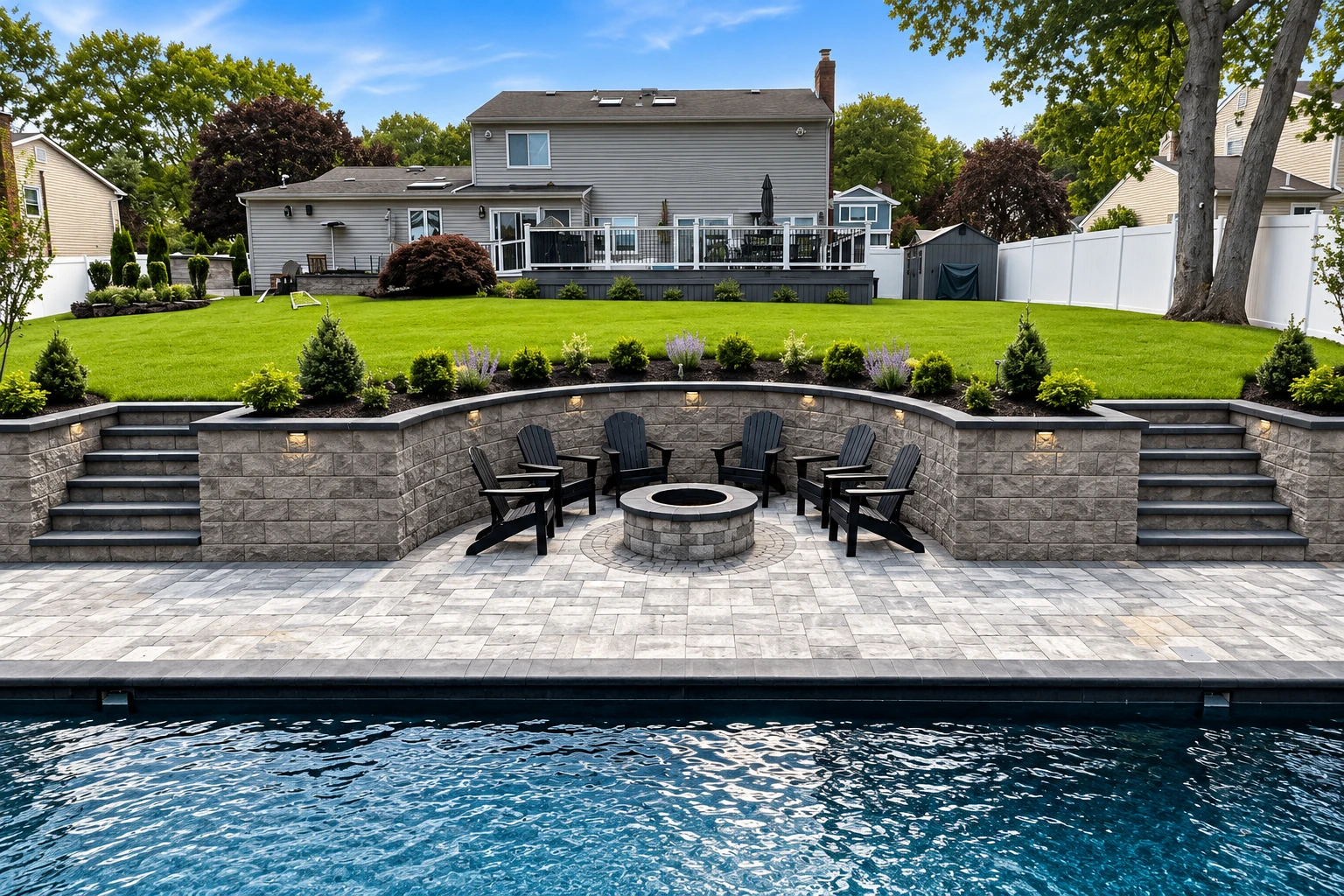
Concrete driveway building
We break out the old driveway, dig and pack the base, and cut control joints, grooves that give the slab a planned place to crack instead of a random one.
Advantage Long Beach Concrete Company is a concrete contractor based in Long Beach, CA, and we pour driveways, patios, walks, steps and slabs for homes and properties in Bellflower. I look at every job myself.
Most of our Bellflower calls come from homeowners on its residential streets, where plenty of the houses are single-story with a driveway running beside the house to a garage. We also hear from property managers who look after apartment buildings and small commercial lots. A lot of that concrete has been down for decades, so we see the same things here as in Lakewood and Gardena: driveways cracked across the middle, walks lifted by tree roots and patios that hold water against the house. On lots like these the old slab usually has to come out, and what we find underneath decides most of the job.
The price moves mostly with the size of the job, how much old concrete we break out and haul away, and how much the subgrade, the soil the slab sits on, needs digging out and packing. The finish matters too, since stamped or colored work takes more labor than a broom finish, the light texture that keeps a driveway from getting slick when it's wet. The schedule turns on curing, the days fresh concrete needs to harden before it takes your weight and then your car, and on what the city asks for on your project. I'll go over both with you at the visit, and your written estimate spells out the work. We're fully licensed and insured.
I come out to look at your job and write the estimate, and our own crew does the work. I'm usually there for the pour, because that's the day mistakes get locked in.
If the budget is tight, I'd rather spend it digging out and packing the base than on a fancier surface, because a slab on loose dirt settles and cracks however nice it looks.
Before I price your job, I check with the city's permit office on what your project calls for. If a permit is needed, we handle the application and meet the inspector on site.
We break out the old driveway, dig and pack the base, and cut control joints, grooves that give the slab a planned place to crack instead of a random one.
Many older patios were poured flat or tipped toward the house, so we set the slope to carry rainwater out into the yard before we pour.
Pressed patterns give a patio the look of stone or brick, and we pour early in the day so the surface stays workable long enough to stamp evenly.
We replace front walks and side paths that roots or settling have lifted into trip edges, with a broom finish so the surface keeps its grip when it's wet.
Older garage slabs are often cracked and sunk at the door, so we pour a new floor on a packed base, sloped slightly so water runs out.
Color, exposed stone and scored borders can dress up an entry or patio, and I talk through how each one wears and cleans before you choose.
Where a yard steps down or soil presses against a drive, we build poured walls with steel rebar inside and drainage behind, since trapped water usually tips walls over.
We pour interior slabs for additions, workshops and converted spaces, checking the base and level as we go, since a floor that's off shows up later under tile or wood.
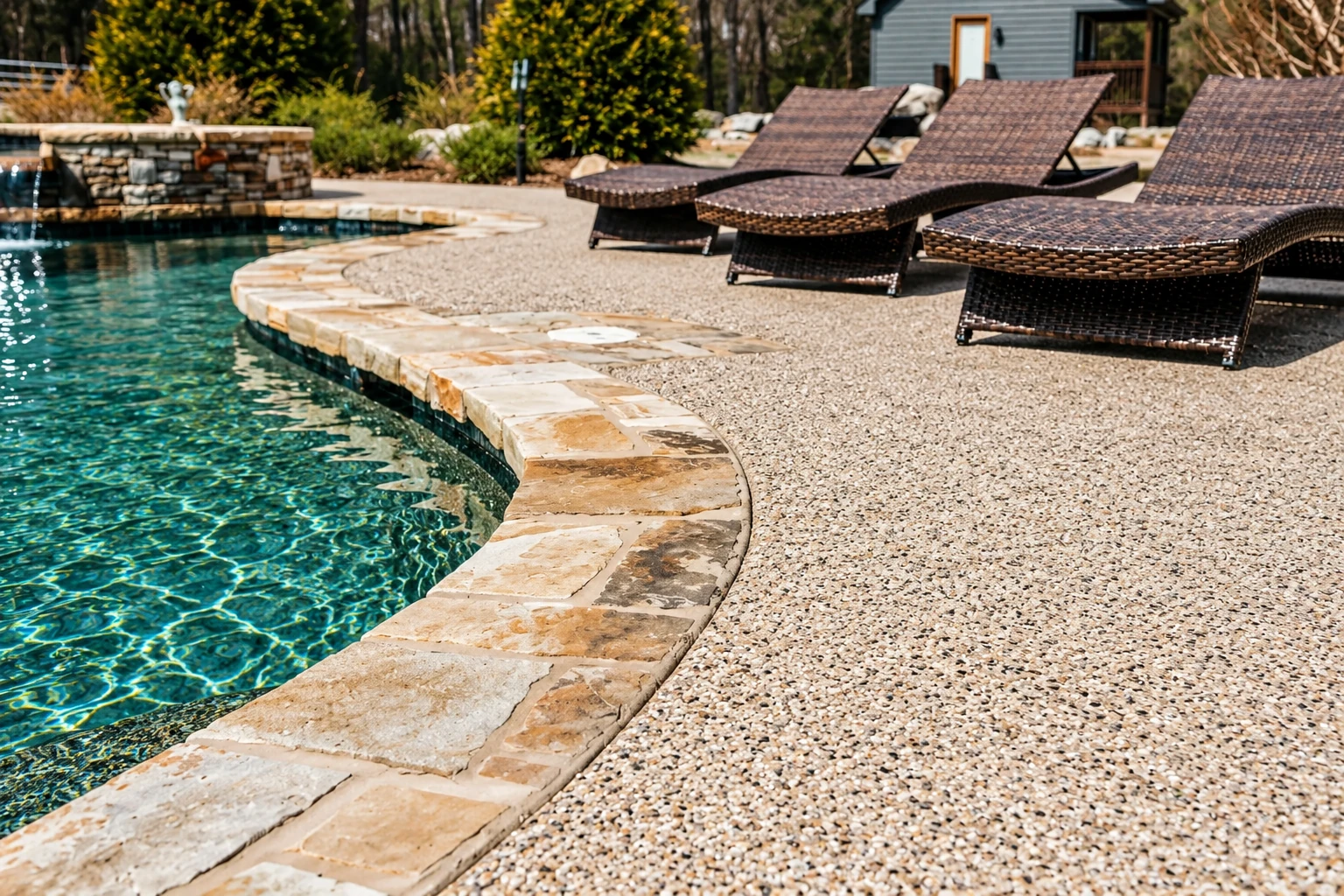
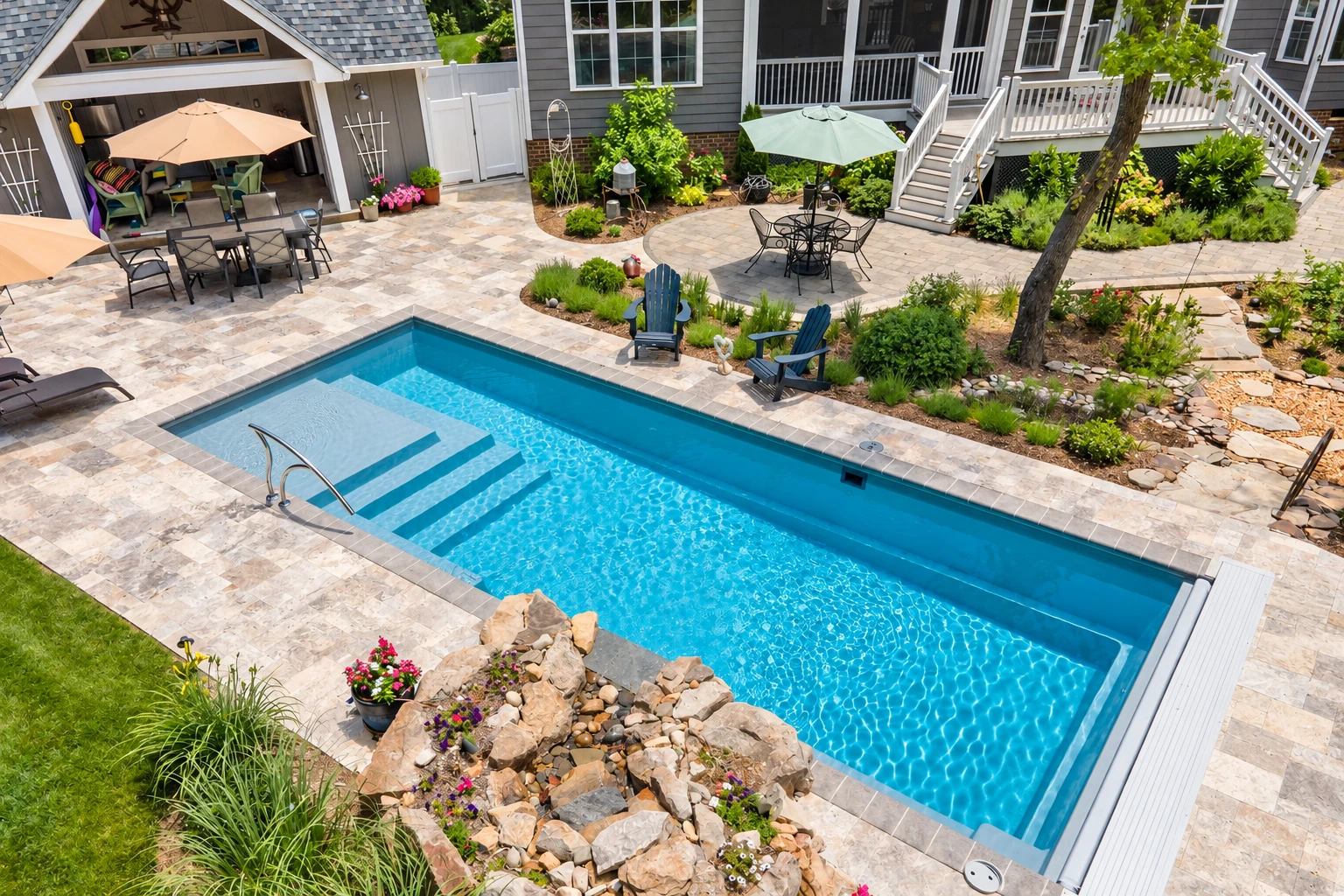
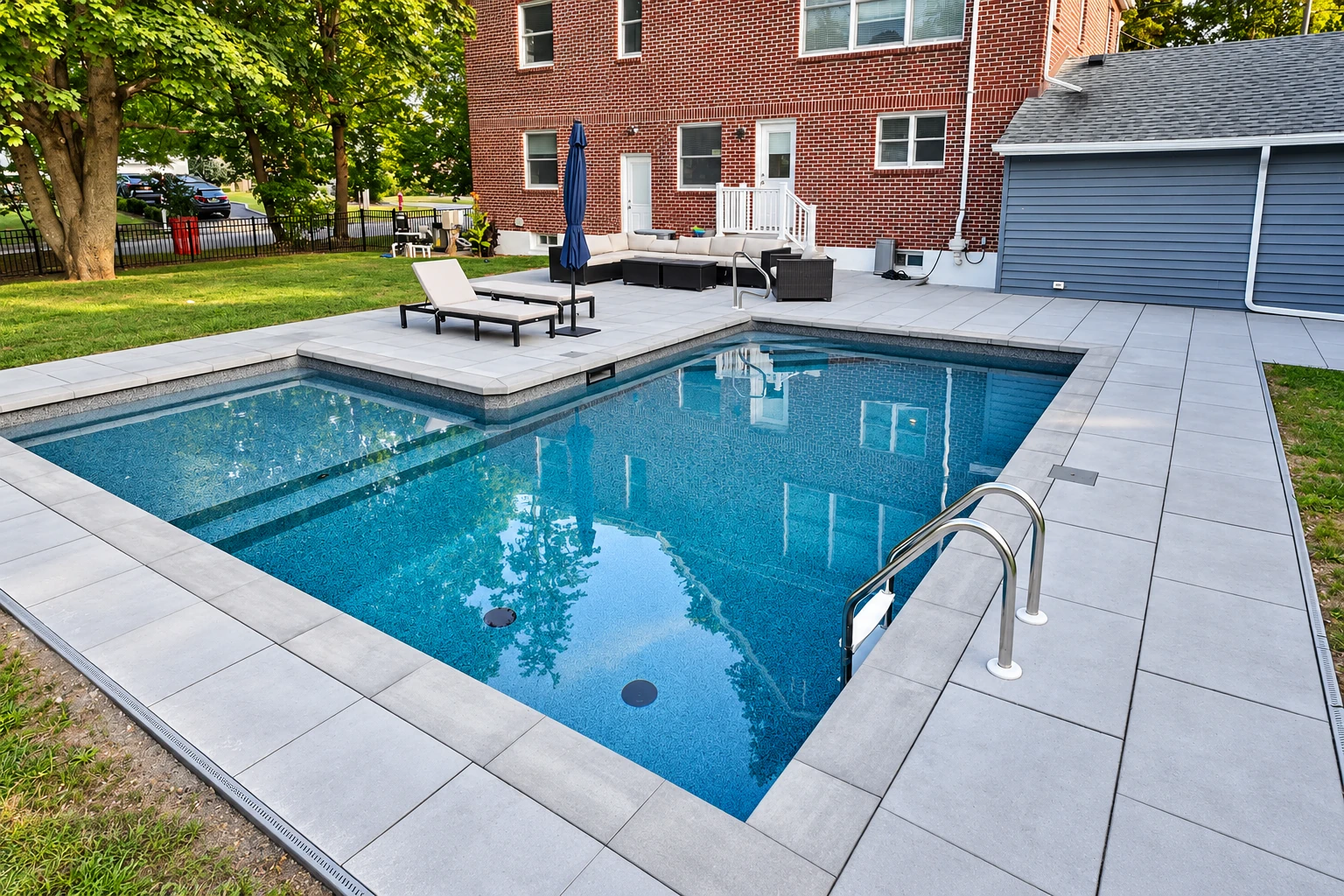
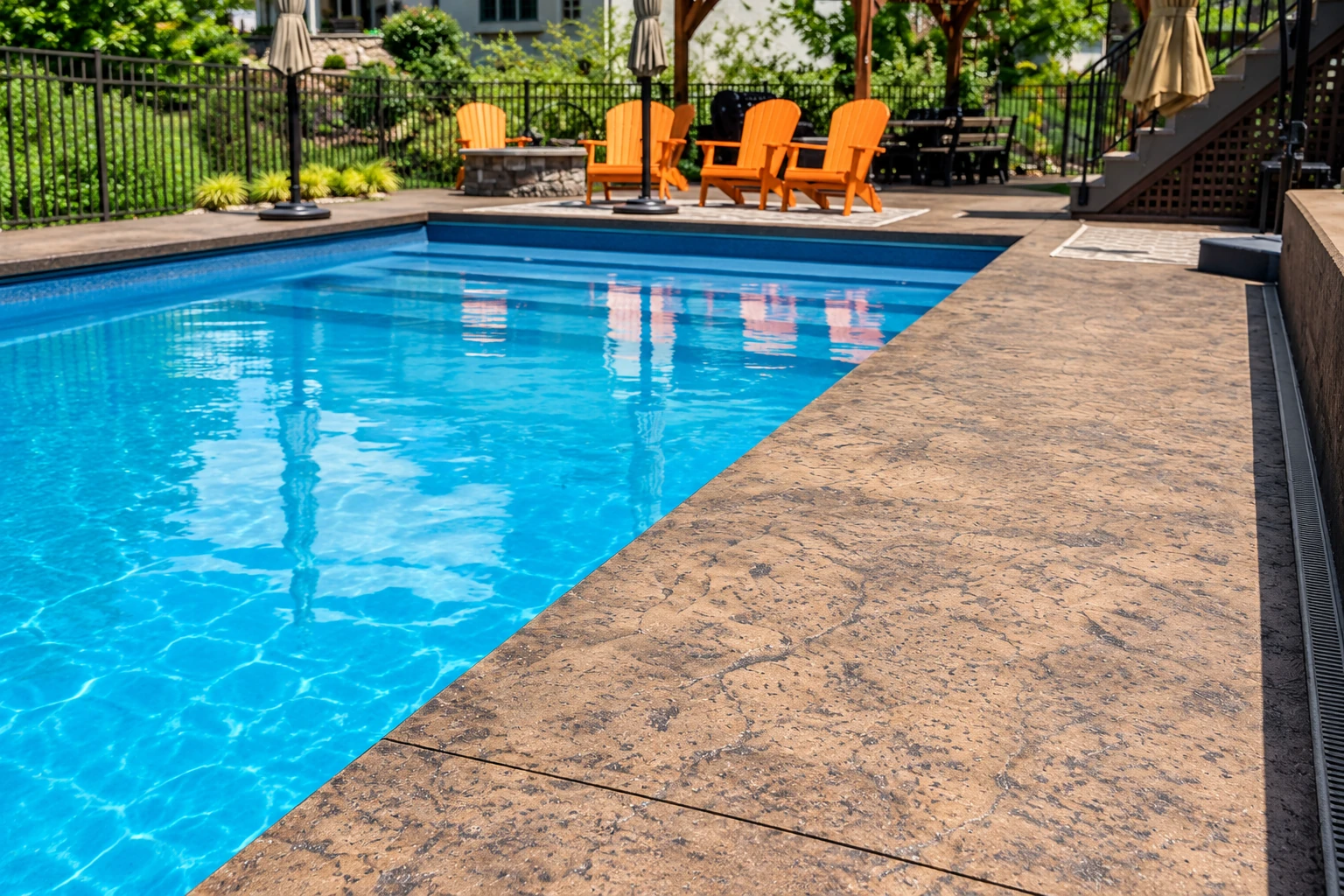
Around a pool we use a textured finish that grips under wet bare feet and slope the deck so splash runs off instead of pooling at the edge.
Front steps that have pulled away from the porch or tipped out of level get rebuilt with even risers, so every step is the same height.
For garages, additions and backyard units, we dig, form, set the steel and pour the slab to the plans, with the base packed tight underneath.
For new structures we handle the trenching, forms and pour, building to the plans' details for depth and steel, since everything above rests on them.
Property managers call us for apartment and small commercial lots, where we plan thickness and drainage for daily traffic and can work in sections so tenants keep some access.
The buried concrete under a wall, post, porch or addition carries its weight into firm soil, so we dig to the plan's depth and clean loose dirt from the trench.
When part of a slab has sunk, I look at why before we lift it, because raising concrete without fixing the soil or water underneath usually means it settles again.
We saw-cut openings, trenches for plumbing and clean edges where only part of a slab comes out, so the concrete you keep isn't broken up by a jackhammer.
Send the form and we'll reply within one business day. Then I come out, look at the job and give you a written estimate, free and with no obligation.
Your estimate comes in writing with each part of the work listed, from breaking out the old slab to the finish, so you can compare it fairly with other bids.
The visit costs nothing, and there's no pressure to book. If something needs checking, I'll say so and get back to you instead of guessing.
We've done driveways, patios and walks from Long Beach since 2021, for homeowners and property managers both, and we work by one promise. Your satisfaction, guaranteed.
These are the questions Bellflower homeowners usually ask before hiring a concrete contractor, from licensing to payments to earthquake zones.
The Contractors State License Board licenses and regulates contractors across California, including the ones working in Bellflower. The city also requires a business license, which it calls a Business Tax Certificate, renewed each year. To ask about a contractor's city license, call the city's Business License Division at (562) 804-1424. We're fully licensed and insured.
A contractor can ask for no more than $1,000 down, and less on a smaller job, since the state licensing board also ties the cap to the contract price. The board says any other payments are listed clearly in the contract and based on work already done or materials delivered to your home. It applies these rules to all home improvement projects.
The state's EQ Zapp tool answers that when you type in your address, and it also tells you if the state hasn't evaluated your area yet. It comes up mostly with foundation work, since the state's site-study rules for those zones exempt a single-family frame house of up to two stories outside a development of four or more units, though the city can be stricter.
These are the cities with their own page on our site, and we work in others around Long Beach too. If yours isn't listed, call or send the form to ask.
Thank you for reading, and please call (562) 269-3293 or use the form, since a sinking slab is usually easier to fix early.