A front walk that trips people
When a slab has lifted or cracked enough to catch a toe, replacing that run of walk usually makes more sense than patching it, because a patch doesn't fix the ground underneath.
Cracked, lifted or uneven walk to your door? We build a new concrete sidewalk on firm ground, planned around the trees beside it.
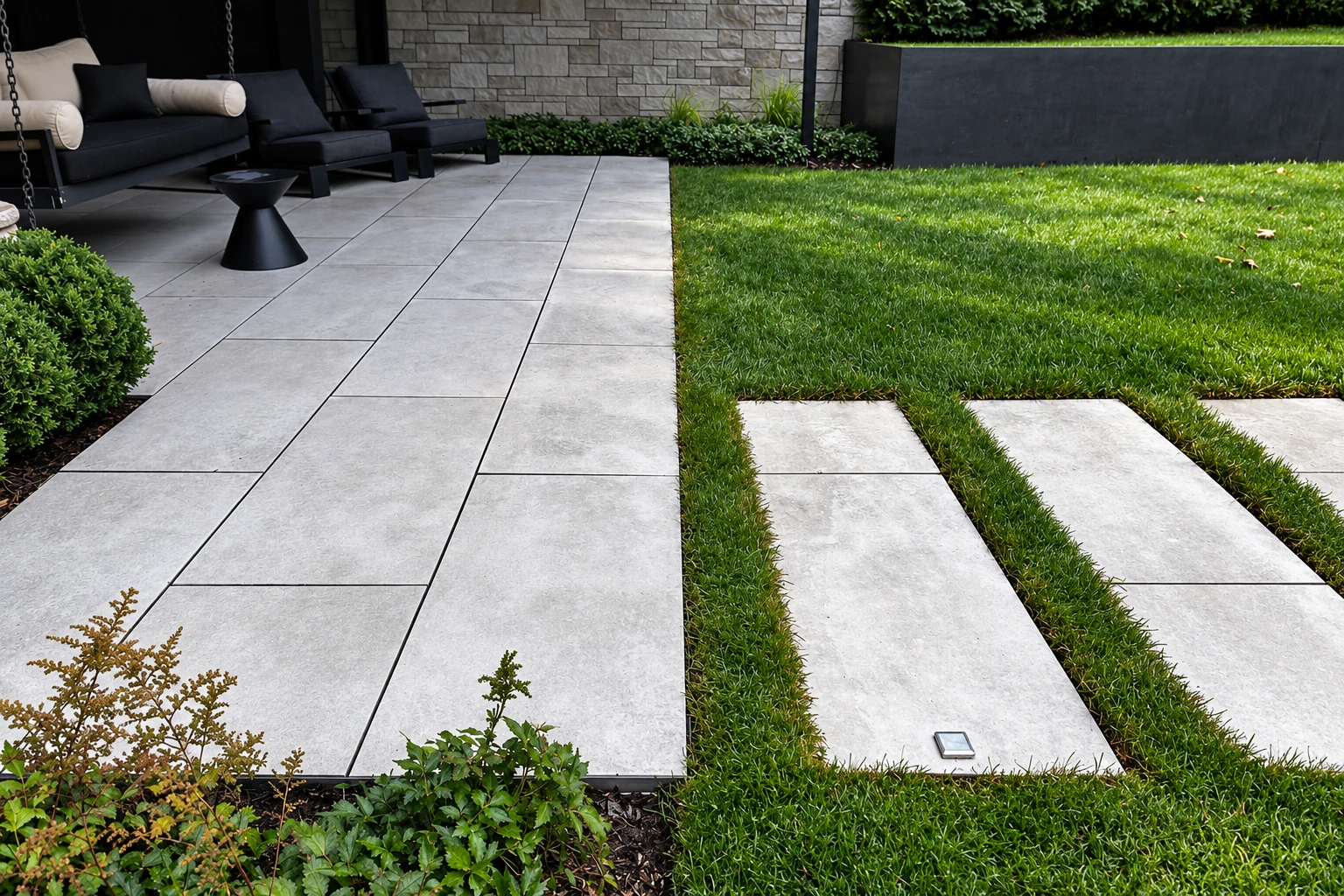
Concrete sidewalk building in Long Beach means forming, pouring and finishing a new walk of flat concrete. Contractors call that kind of work flatwork. The walk is set to screeds, the straight guides that keep the surface level, so you end up with an even, safe path to your door.
Most calls I get about walks start with a crack someone trips on, a slab a tree root has pushed up, or water pooling where the walk dips toward the house. The price moves with the size of the walk, how much old concrete comes out, what the roots and ground beside it need, and the finish you pick. The schedule mostly turns on whether a permit is needed, how fast the ground dries after rain, and curing, the wait while new concrete hardens before it can take foot traffic. Before I price anything, I check with the city's permit office about what your walk calls for, and the written estimate spells out the work so you can compare it line for line.
I come out to see your walk and write the estimate myself, and I'm usually there for the pour, so the person who priced the job is the one watching it go in.
The people pouring your walk are our own crew, so the base, the joints and the finish get done the way we talked them through with you at the estimate.
Before I started this business in Long Beach in 2021, I spent years fixing cracked walks and uneven steps for a property management company. That's where I learned which shortcuts I'd end up repairing later.
I start with the trees and planting strips near the walk, because roots are one of the usual reasons a walk lifts and cracks. I also check whether the walk reaches city property, so we know which paperwork it needs before we plan anything. Then our crew breaks out the old concrete and digs down to the subgrade, the ground the slab sits on. We water and pack it until it's firm, and we dry out or remove any soft, spongy spots before the forms go up. We set the forms and screeds so the walk sheds water away from your house, and we pour in the cooler part of the day, because concrete placed in midday heat can end up with a weak, dusty top. We give it a broom finish, a light texture that keeps the walk from getting slick when it's wet. We cut control joints on time, because a groove placed on purpose gives the concrete somewhere to crack where you won't notice it. The base is buried by the end of the first day, so it's the first thing a tight budget wants to cut. I'd rather spend on the base and keep the finish plain, because a nice top on soft ground is exactly the walk I used to get called back to replace.
If the walk runs up to a garage with a cracked or sinking floor, we can look at garage floor concrete on the same visit and plan both pours together. If you'd like color, texture or a pattern instead of a plain broom finish, our decorative concrete work can tie the new walk to a patio or entry you already have.
When a slab has lifted or cracked enough to catch a toe, replacing that run of walk usually makes more sense than patching it, because a patch doesn't fix the ground underneath.
A walk that tips toward your house holds water against the wall after every rain, so we set the new one to carry water out toward the yard or the street.
Plenty of homes need a firm path along the side of the house to the bins, the gate or the backyard, and a concrete walk takes carts and daily foot traffic without rutting.
Homeowners and property managers both call us, across Long Beach and many of the cities around it, because a lifted walk at a rental is a trip hazard someone has to answer for.
We reply within one business day, and there's no pressure to book. I'll set a time to come look at your walk and the trees beside it, then give you a written estimate with the work spelled out.
A rough length and width is plenty, because it tells me what to expect before I visit and lets me check early whether your walk reaches city property.
Please mention large trees or narrow planting strips beside the walk, since roots change how we plan the job and they're the first thing I'll want to look at.
If I can't answer something for certain, I'll tell you so and point you to the office that can, rather than guess and leave you to find out later.
These example photos show broom-finished, colored and patterned concrete walks and paths, so you can pick a finish and layout to talk over at the estimate.
Plain answers to what homeowners ask about cost, permits, tree roots and licensing before a new concrete sidewalk goes in.
A residential concrete sidewalk, installed, usually costs about $5.50 to $11 per square foot in the Los Angeles area. That's the going range in the area, not our price. Where your walk lands depends on what we find on site. The estimate is free and written out in full. Your satisfaction, guaranteed.
The Public Works/Utilities station at the Long Beach Permit Center issues permits for curbs and other construction in the public right-of-way, the public strip along the street. For work entirely on your own lot, the Building counter there handles construction on private property. We find out which one your walk falls under, and when a permit is required we apply and meet the inspector on site.
Long Beach Public Works says sidewalks naturally wear out over time, and it lists tree root growth, soil movement, weather, water getting in, vehicle loads and earthquakes among the common causes. An older tree study from outside the area linked large trunks and narrow planting strips to heavy damage. That's why a big tree beside a thin strip is the first thing I'll point out at the estimate.
It can help when new trees go in. In a North Carolina trial, trees planted next to sidewalks with a root barrier, a gravel layer or a foam layer went with minimal lifting or cracking, so ask about those if you're planting by a new walk. Where a walk meets existing city trees, the city's standard plans include sidewalk work with a root barrier.
Yes, unless the whole job comes to less than $500. California exempts minor work from contractor licensing only when the total contract price, labor and materials included, is under $500, and not when that work is part of a larger project. The Contractors State License Board licenses concrete contractors for pavement and flat concrete work, and we're fully licensed and insured.
No, according to one concrete products maker's hot weather guide. It says crews shouldn't add water to cool the concrete or make it easier to work, because the extra water can hurt its strength and long-term durability. On a warm pour day, it's fair to ask any contractor how they'll keep the concrete workable without adding water.
Thank you for reading. Call (562) 269-3293 any day of the week, early morning into the evening, or send the form and I'll come look.