Steps on your own lot
Long Beach issues building permits at its Development Permit Center to contractors with a California license and a city business license, and owners of a one or two-family home may qualify too.
If your entry steps are cracked, uneven or pulling away from the house, we build new ones that rise evenly and feel sure underfoot.
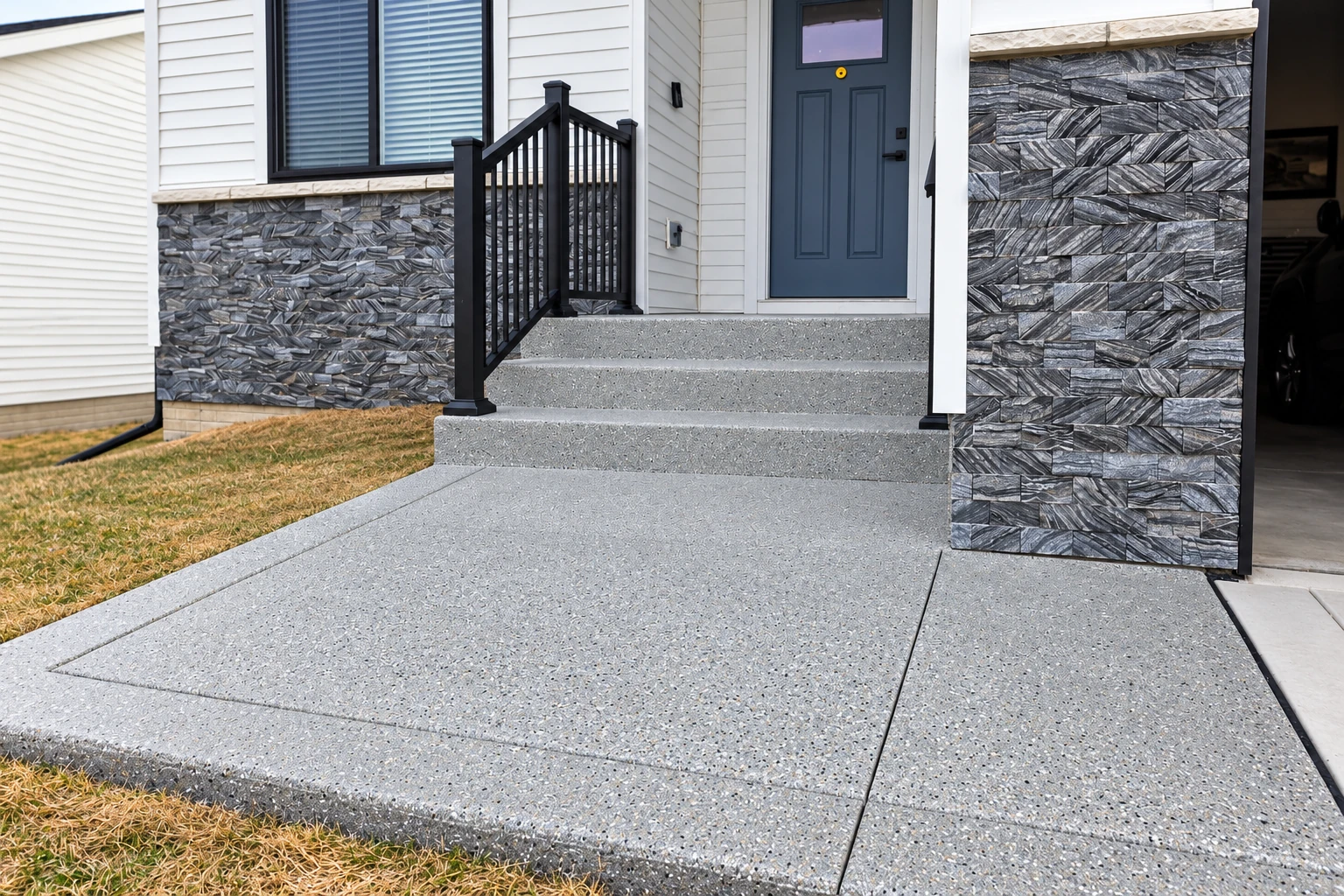
Concrete steps construction in Long Beach replaces cracked, sinking or uneven steps with new ones that are either poured in place or precast, which means cast ahead of time and set on site, so each step is the same height and the treads give you grip.
Most calls I get start with steps that have cracked, settled or tipped toward the house, and the first question is usually the price. What moves it is whether you choose precast or poured, how many steps your door height calls for, whether a landing or handrail belongs in the plan and whether old steps have to come out first. The schedule turns mostly on the curing wait and on what the city's permit office says about your project, and I check with that office before I price anything. Your estimate comes in writing with the work spelled out, so you know exactly what you're comparing. We're based in Long Beach and work across it and many of the cities around it.
I come out to see your entry, measure the rise and write the estimate myself, so the person pricing your steps is the same person answering for how they're built.
Our own crew builds your steps, and I'm usually there for the pour, because that's the part of the job that's hardest to put right once the concrete sets.
Before starting this business in 2021, I spent years fixing uneven steps and cracked walks for a property management company, so I build steps to hold up for whoever uses them every day.
We start by working out with you whether precast or poured steps suit your entry and your budget. Then we take out the old steps, dig out the loose dirt and pack a firm base, because steps set on loose fill settle and lean. For poured steps, we lay out the full rise before we build forms. The rise is the height from the ground to your door, and splitting it evenly up front keeps small errors from stacking up from one step to the next. I ask early about handrails and landings, since either one changes the layout. Next we set rebar, the steel bars that hold the concrete together if it cracks. We pour early in the day, because midday heat can leave a weak, dusty top. The treads get a broom finish, a brushed texture that gives your feet grip, and a slight pitch away from the door so water runs off instead of toward the house. Then the concrete cures, which is the wait while it gains its strength. If the budget is tight, I would rather spend it on the base than on a fancy surface, because nobody sees the base on day one, but it decides whether your steps are still level years from now.
Steps often connect to something larger. Whether they rest on the ground, tie into a landing or join the house sets how much steel and footing they need, so on new homes and additions we plan them alongside slab foundation building or foundation installation instead of fitting them in afterward.
Long Beach issues building permits at its Development Permit Center to contractors with a California license and a city business license, and owners of a one or two-family home may qualify too.
When digging reaches into the city right-of-way, the streets and other public property, Long Beach Public Works issues that permit, so where your bottom step lands decides which office we deal with.
The city notes that historic districts may carry additional requirements under its zoning rules, so if your house is in one, please tell me and I'll ask about it before pricing.
Coastal zones may carry extra requirements as well, the city says, and it's far better to learn that before the old steps come out than after the forms are set.
Send the form and we'll reply within one business day to set a time. I'll come out, measure your entry and give you a free written estimate, with no obligation to book.
Photos of the steps you have now show me their condition and anything attached to them, so my visit can go straight to the details that set your price.
A rough tape measurement from the ground to your door tells me how many steps you need and whether a landing is likely to belong in the plan.
If your home sits in a historic district or a coastal zone, please note it on the form, because the extra city requirements there can change the plan.
The photos below show broom-finished treads, landings and step layouts you can point to when we talk through your entry.
These are the questions I hear most from homeowners planning new steps, with plain answers on cost, permits, curing, sizing and licensing.
Yes, precast steps usually cost less, because they're hollow and easier to assemble on site. Poured steps cost more, but they can be built in a much wider range of sizes. If a standard precast unit fits your door height and walk, it's a sensible saving, and if your entry is an odd size or needs a landing, poured is usually the better choice.
Installing concrete steps in the Los Angeles area usually costs about $700 to $5,500 per job. Where yours falls depends on precast or poured, how many steps you need, whether there's a landing or handrail and whether old steps come out first. Your estimate spells all of that out in writing. Your satisfaction, guaranteed.
Long Beach's Building and Safety Bureau requires permits for most construction on homes, and its list of work that needs no permit names concrete pathways, driveways and decks, not steps. So your project needs a real answer from the city before work starts. When a permit is required, we handle the application with the right office and meet the inspector on site.
One technical guide says stair concrete must be cured for at least 7 days for strength and durability. The same guide lists wet burlap under plastic sheeting, steady water misting or a liquid curing compound as ways to keep it damp while it hardens. I'll go over the timing for your steps when I write your estimate.
They may, because building codes can set handrails, guards and landing size, along with riser height, which is how tall each step is, tread depth and width. Those rules shape the whole design, so I work out the exact sizes for your entry at the estimate instead of guessing from a photo.
Yes, in most cases. California's C-8 Concrete Contractor license covers forming, pouring, placing and finishing concrete, and the state's minor work exemption, set at $1,000, applies only when the job needs no permit and the person hires no employees. In Long Beach, a contractor with employees must also show workers' compensation proof when the permit is issued. We're fully licensed and insured.
Thank you for considering us. One visit to your entry settles precast or poured, and you'll know the plan before anything is torn out.