Backyard patios
A patio is where people most often want the look of flagstone, brick or wood, and stamping gives you that pattern in one continuous slab rather than hundreds of separate pieces.
If your plain gray patio or walk looks tired, we can pour a colored, patterned slab that's built to hold up underneath.
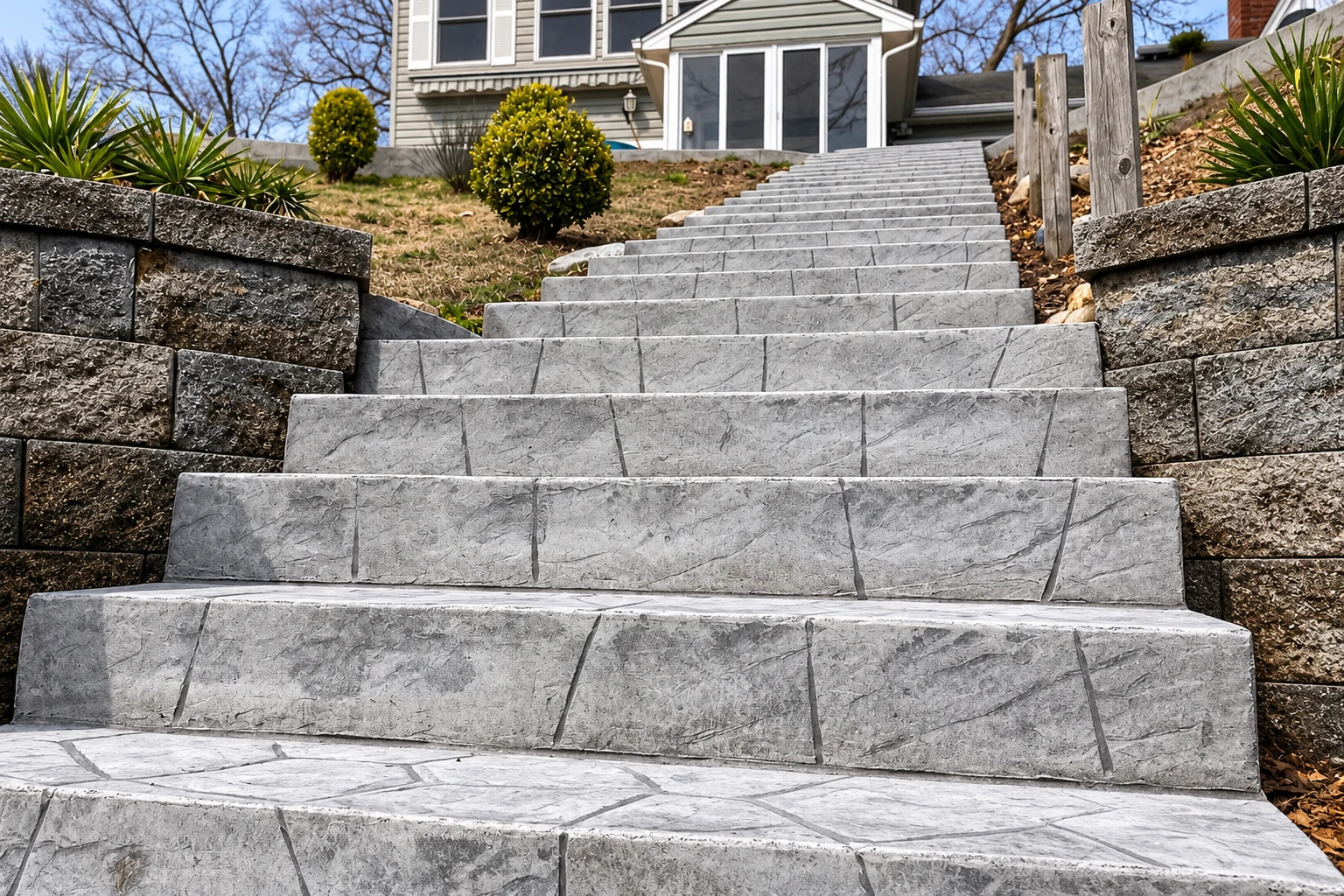
With stamped concrete services in Long Beach, we give your patio, walk or driveway the look of stone, brick, wood or tile by coloring fresh concrete, pressing it with rubber mats while it's still soft and sealing it once it has cured.
Usually the people who call us have a plain slab that's cracked or just looks worn, and they want something that looks finished without giving up the strength of concrete. The price moves with the size of the area, how detailed the pattern is and which color method you pick, so a simpler pattern on a smaller patio keeps the total down. The schedule turns mostly on whether the city needs a permit for your project and on curing, the wait while fresh concrete gains strength before you walk or drive on it. Once I've seen the area, my estimate gives you your own figure.
I come out to look at every job and write the estimate myself, because the slope, the access and the old slab all change the work, and I'd rather see them than guess.
Our own crew does the work, and I'm usually there for the pour, because the color and the stamping have to be done while the concrete is still soft.
I spent years fixing cracked walks and tired slabs for a property management company, so I know what a shortcut under the surface costs the owner a few years on.
I start by walking the area with you and helping you choose between color mixed all the way through the concrete and color worked into the top, since each one wears differently. We go over resealing at the same time, so the upkeep is part of the plan from the start. Then our crew digs out to firm ground and packs the subgrade, the soil the slab sits on, because a base that's only raked level settles with the dirt under it. We set the forms so the slab falls away from your house and water runs off instead of pooling. We lay rebar, the steel bars that help hold the slab together if it cracks, and we pour early in the day so midday heat doesn't leave a weak, dusty top. While the concrete is still soft, we add the surface color if you chose it, press the pattern with rubber mats and cut control joints, shallow grooves that tell the slab where to crack, and once it has cured we seal it. If the budget gets tight, I'd rather simplify the pattern than skimp on the base, because the base is the part nobody sees on day one and the part you can't fix later without starting over.
Stamped work usually sits next to plain concrete, so it makes sense to plan the two together. If the front walk is worn, our concrete sidewalk building work can replace it so the new walk lines up with the stamped area. When a stamped driveway runs to the garage, we can pour new garage floor concrete at the right height so the two slabs meet cleanly.
A patio is where people most often want the look of flagstone, brick or wood, and stamping gives you that pattern in one continuous slab rather than hundreds of separate pieces.
The front walk is the first thing visitors cross, so a stamped border around a plainer center can dress it up while keeping the pattern simple.
A driveway carries cars every day, so the base, the slab thickness and the reinforcement matter most here, and the color method needs to stand up to tires and turning.
Side yards, the ground around a fire pit or a small seating area can be stamped to match the main patio, so the whole yard reads as one finished space.
Send the form and we'll reply within one business day to set a time. Then I'll come out, measure the area and give you a free written estimate with the work spelled out, with no pressure to book.
A rough measurement is enough to start, because size is one of the main things that sets the cost and shapes how we plan the pour.
Let us know whether it's a patio, a walk or a driveway, since a slab that carries cars needs a different base, thickness and reinforcement than one you only walk on.
A photo of a pattern or color you like helps, and you're welcome to email it to projects@longbeachconcretecompany.com so I can bring ideas to the visit.
These photos show stamped patterns, colors and plain concrete finishes you can point to when we talk through the look you want.
Here are the questions Long Beach homeowners ask me most about stamped concrete, from cost and color to permits and upkeep.
Stamped concrete in the Los Angeles area usually costs about $15 to $30 per square foot, going by a cost guide's figures for that market. That's a market figure, not our price, and the size and pattern of your area decide where you fall. I'll measure on site and give you your own figure in writing.
For a driveway, an installation field guide calls color hardener, a powder worked into the top, the common choice, because it gives richer color and a harder surface. Its color sits only in the top layer, so a deep chip shows gray and uneven work can look blotchy. Color mixed through stays the same color when chipped but won't reach the deepest or brightest tones.
It can crack, because stamped concrete is still a slab and the pattern on top hides none of the mistakes underneath. What helps it hold up is a compacted subgrade, the right thickness for its use and reinforcement sized to the job, so ask any contractor how they prepare the base before any color goes on. I'm glad to walk you through ours.
It may, because the Long Beach Building and Safety Bureau requires permits and inspections for most residential construction, including replacements and repairs. Historic districts and coastal zones can add requirements, and work in the street or on public property goes through Public Works. Before I price your job, we check with the city, and if one is required, we apply for it and meet the inspector.
A contractor licensed by the California Contractors State License Board can, and its C-8 class covers forming, pouring and finishing flat concrete. A license is required when a job needs a building permit, uses employees or costs $1,000 or more in labor and materials, and a Long Beach permit also takes an active city business license. We're fully licensed and insured, so please ask to see both.
In the Los Angeles area, stamped concrete usually needs resealing every two to three years, with upkeep aimed at protecting the surface from sun and wear, so it's worth budgeting for a reseal on that schedule. A field guide also advises two thin, even coats, since one heavy coat can bubble, turn white and get slick when wet.
Thank you for considering us, and we're open seven days a week until 9 PM if you'd like to call (562) 269-3293.