Yards with little room to spare
A poured wall stands straight up on a narrow footprint, so it suits a side yard or a strip along a fence where a wider stacked wall would eat into the space.
Soil slumping toward the patio or a slope creeping into your yard? We build poured walls that hold the line and let water drain.
A concrete retaining wall is a solid wall poured in forms that holds back soil along a firm, clean line. We build them across Long Beach and many of the cities around it to turn a sliding slope into level ground that keeps its shape.
Most homeowners and property managers call me when soil is slumping onto a walk, a slope keeps washing toward the house, or an old wall has started to lean. The price of a poured wall moves with its length and height, how easily we can get forms, steel and a concrete truck into the yard, and the drainage it needs, while the schedule turns mostly on the cure wait before soil can go back behind it. We're fully licensed and insured, and before I put a price on your wall, we check with the city's permit office about what your project calls for. Your written estimate then spells out the work for your own wall.
I come out to see each job and write the estimate myself, so the person who walked your slope is the one who stands behind the price.
Our own crew builds the wall, and I'm usually on site for the pour, because that's the one step nobody can undo once the concrete sets.
Before starting here in 2021, I spent years repairing cracked walks and tired slabs for a property management company, so I build for the person who has to live with the wall.
I start by walking the slope with you, looking at where the water runs today, and settling the wall's line and height before anything is poured, because changing a poured wall later is a big job. Trapped water behind a wall is the usual reason walls fail, so drainage is part of every wall we price. Our crew digs out for the footing, the wide concrete base the wall stands on, and packs the ground beneath it instead of leaving loose dirt to settle. We set the forms and the rebar, the steel that lets the wall hold back the weight of the soil, and we pour in the cooler part of the day so the concrete doesn't come out weak and dusty on top. After the curing wait, the time the concrete needs to gain its strength, we lay the drainage behind the wall, fill the soil back in and grade it so water heads away from the wall and your house. If a budget gets tight, I'd rather keep the face simple than cut the footing or the drainage, since nobody sees those on day one and they're what keeps the wall standing.
A wall is usually one part of a bigger change on a sloped lot. The level ground it holds back is often where a new concrete pool deck goes, and a wall that also serves as a foundation can carry one edge of a garage or workshop floor through our concrete floor installation work, so we plan the pieces together and pour them in the right order.
A poured wall stands straight up on a narrow footprint, so it suits a side yard or a strip along a fence where a wider stacked wall would eat into the space.
When the wall also has to carry the edge of a floor or structure, poured concrete with steel inside is a sensible choice, because it's cast as one solid piece.
Because it's cast in forms, a poured wall gives you a smooth, single-piece face along a sharp line, which suits owners who want a firm edge rather than a stacked look.
Holding back a slope gives you level ground for a patio, a play area or planting beds, and it keeps soil and runoff from washing onto your walks.
Send the form or call, and we'll reply within one business day to set a visit. I'll come out, look at the slope and give you a free written estimate, with no obligation to book.
Give us a rough idea of how long and how tall the wall needs to be, even by eye, because size moves the price and bears on the permit question.
A few phone photos of the slope, the soil and the way into the yard help me plan access for forms and the concrete truck before I arrive.
If you know your lot is in a coastal zone or a historic district, please mention it, so I know to ask the city what extra steps may apply there.
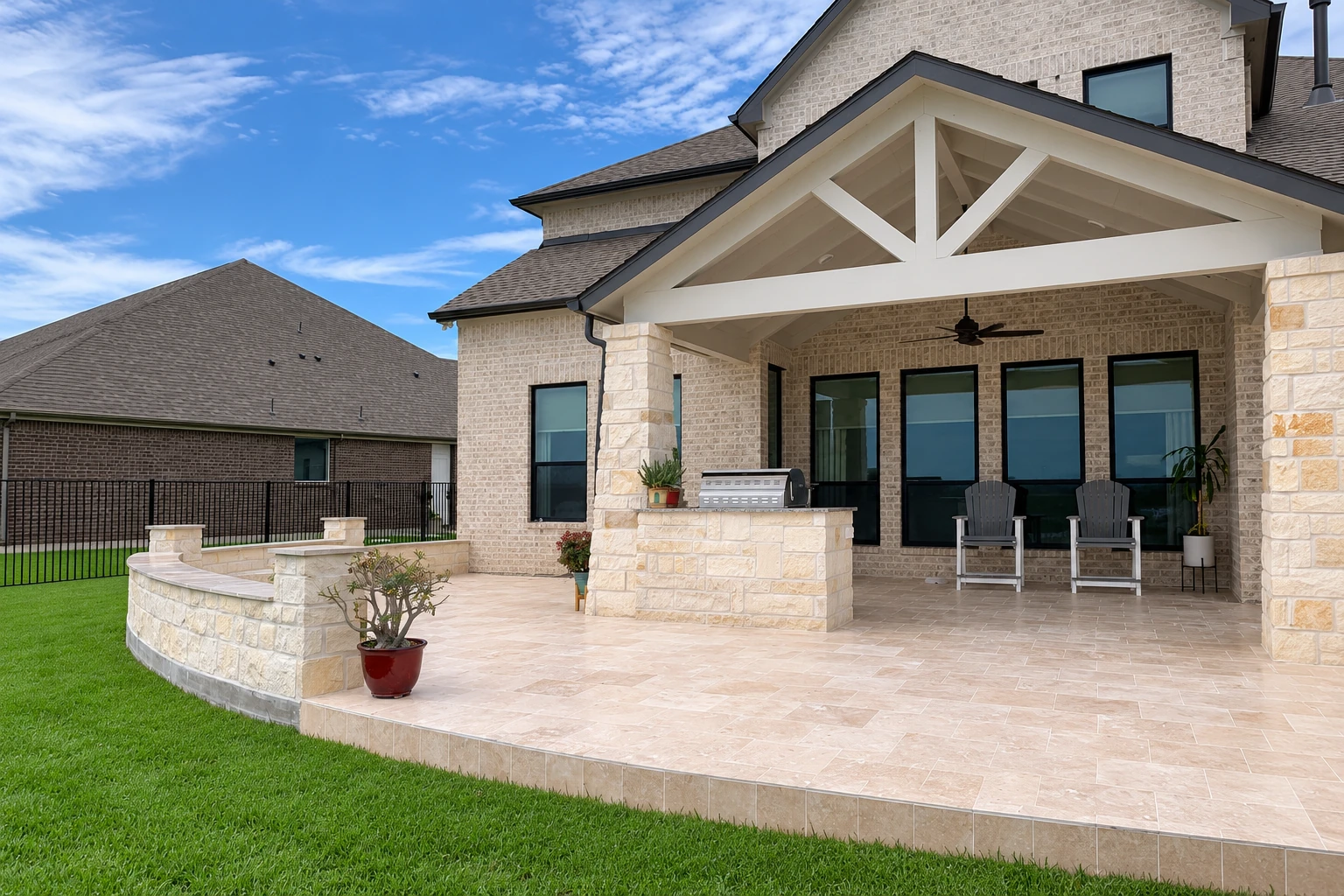
These photos show wall faces, cap edges and the patios and decks beside them, as examples to talk through for your own yard.
Here are straight answers to what people ask most before building a concrete retaining wall in Long Beach.
A wall four feet or less, counting the footing, is exempt in Long Beach unless it holds up extra weight above it or sloping earth. The exemption doesn't apply on slopes steeper than 20%, and historic districts and coastal zones may add requirements. We check with the city's Development Permit Center before pricing, and if a permit is required, we handle the application and meet the inspector.
Retaining walls in the Los Angeles area usually cost about $50 to $54 per square foot, for retaining walls in general. On a poured wall, getting equipment into the yard and the design work can make up most of the cost, so an open front yard and a tight backyard price quite differently. Your own figure comes in the written estimate after I've seen the site.
Most fail because water gets trapped behind them and pressure builds up against the wall. A drainage system of gravel, pipe, fabric and grading gives that water a way out. Solid concrete walls also have weep holes, small openings near the bottom that let water seep out, and because they often clog with plants and trash, it's worth keeping them clear.
Yes, the city lets a homeowner get a permit and do the work on a house they live in or will live in. If you hire the work out, the city issues permits to contractors with a valid California contractor's license and an active Long Beach business license, so it's fair to ask any bidder about both.
It can, because a rigid concrete wall can't bend when the ground under it shifts. That's one reason to look up whether your lot sits in a state Seismic Hazard Zone. If it does, the state has found weak soil or rock likely beneath it, and those materials can fail in an earthquake unless proper precautions are taken during grading and construction.
Settling the wall's line early lets you plan the patio or planting around it, so call (562) 269-3293 or send the form, and thank you.