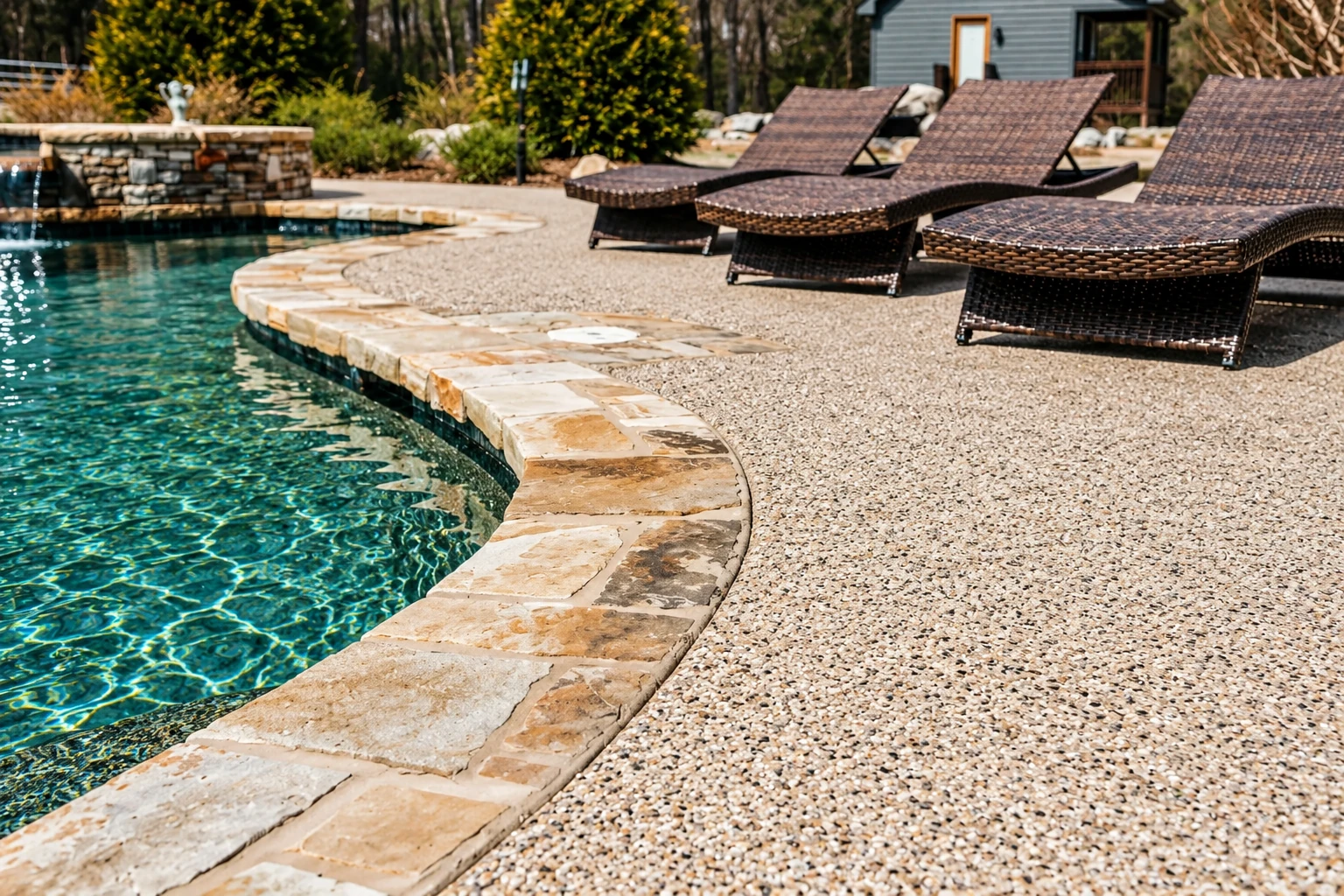
Concrete driveway building
We tear out cracked or sunken driveways, pack a base, tie in rebar, steel that holds the slab together, and cut control joints, grooves that give cracks a planned place.
Advantage Long Beach Concrete Company is a concrete contractor based in Long Beach that builds and replaces driveways, patios, walks and steps for homeowners and property managers in Lakewood, CA, with our own crew doing the work.
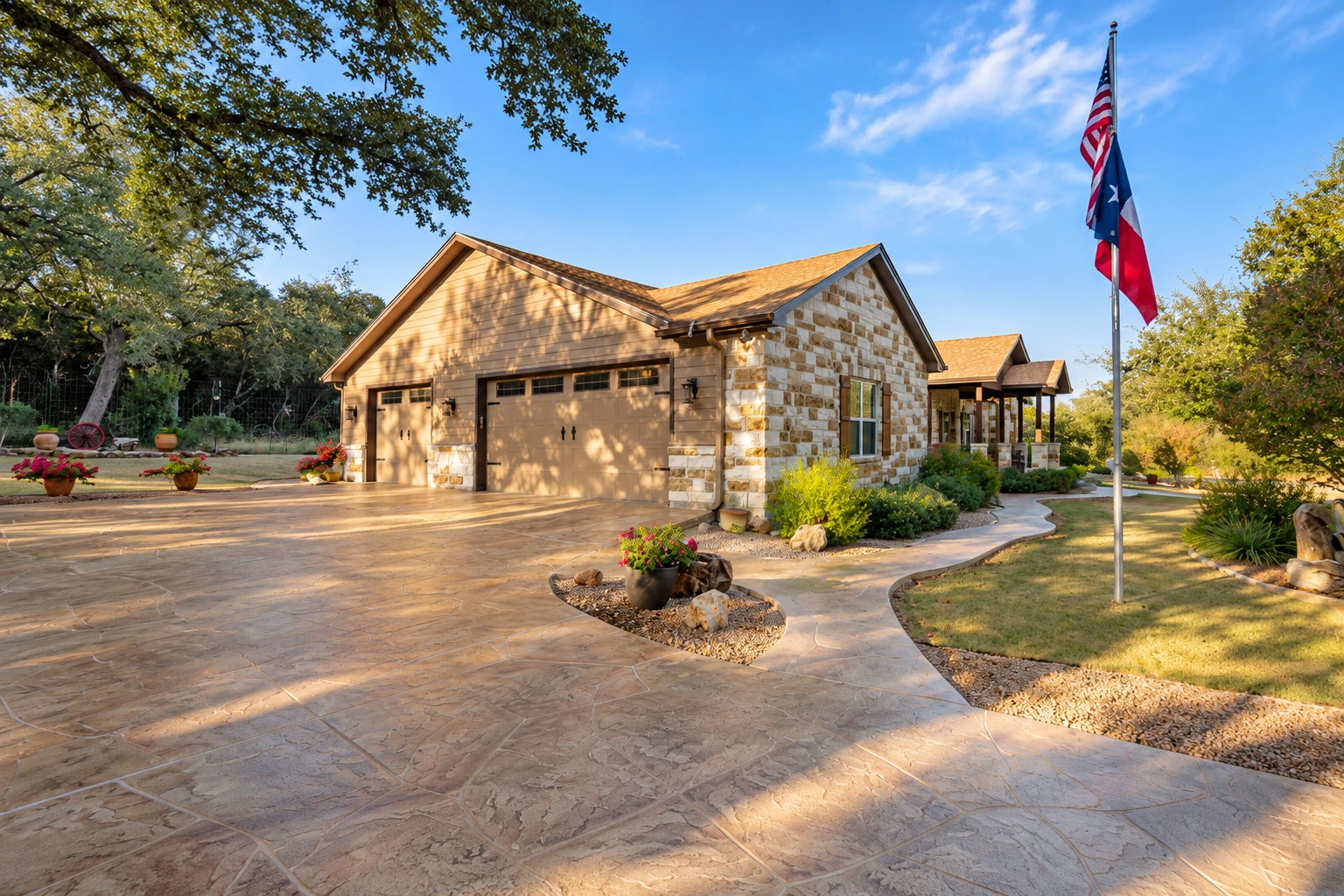
Lakewood sits right next to Long Beach, where we're based, and we do the same work here that we do in Bellflower and Lynwood. Many streets here are lined with older single-story tract homes built to a handful of similar plans, so the calls tend to sound alike. A driveway has cracked or sunk at the garage, a front walk has lifted into a lip, or a back patio holds water by the door. Property managers call about the same problems across several units, which is the work I did for years before I started this company.
What moves the price is how much old concrete comes out, how much work the base needs, the size and thickness of the slab and the finish you choose, while the schedule turns on any permit and on the weather for the pour. Your written estimate spells that out for your house. On lots like these the trouble is usually underneath, because a slab that settled was often laid on ground that was raked flat instead of packed, so we dig out and compact the subgrade the new slab will rest on before we set a single form.
Before pricing, I ask the city's Building and Safety Division what your project calls for. When a permit is required, we handle the application and meet the inspector on site.
We're fully licensed and insured. California's Contractors State License Board issues contractor licenses, and earning one usually means passing a law and business exam plus a trade exam.
If the budget has to give, I'd trim the finish before the base, because you see the finish on day one but the base decides whether the slab sinks later.
We tear out cracked or sunken driveways, pack a base, tie in rebar, steel that holds the slab together, and cut control joints, grooves that give cracks a planned place.
Back patios here often tip toward the house or hold water by the door, so we set the new slab to fall away from your walls and out toward the yard.
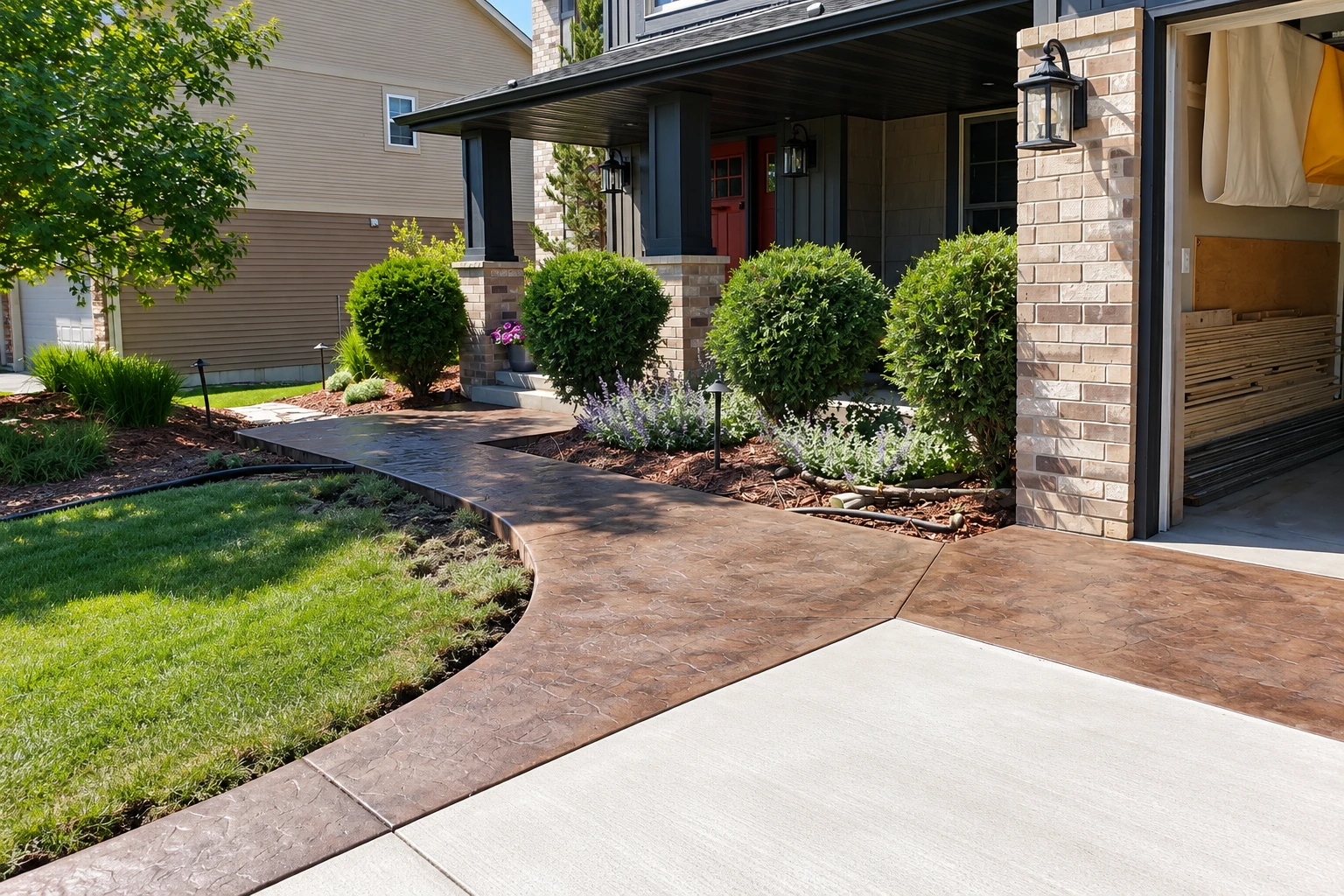
Stamped concrete gives a patio or walk the look of stone or brick, and we pour it on a properly packed base because a pattern shows every crack from settling.
We replace front walks and side paths lifted by tree roots or settled into a lip, because that raised edge is what visitors catch a toe on.
Older garage floors here are often cracked, stained or low at the door, so we pour a new slab with a smooth finish that sheds water out toward the driveway.
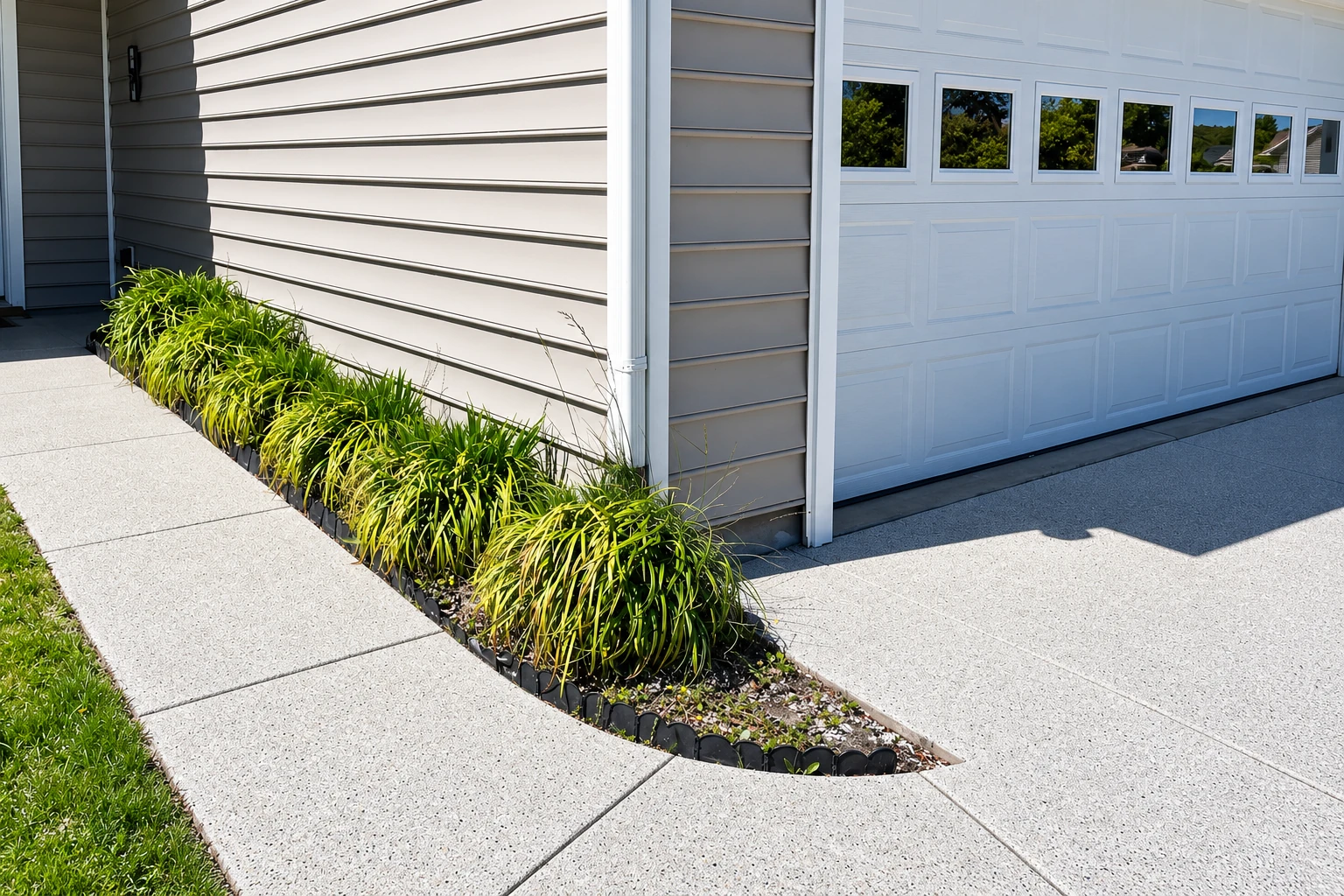
Colored concrete and exposed aggregate can set a plain driveway or entry apart on a street of similar houses, and I'll explain how each finish wears before you choose.
Where yard soil leans on a fence line or a slab edge, we build retaining walls on proper footings, with drainage behind so water runs off instead of pushing.
We pour interior floors for garage conversions, workshops and additions, checking the subgrade and the moisture coming up from below first, since that's what usually ruins a floor finish.
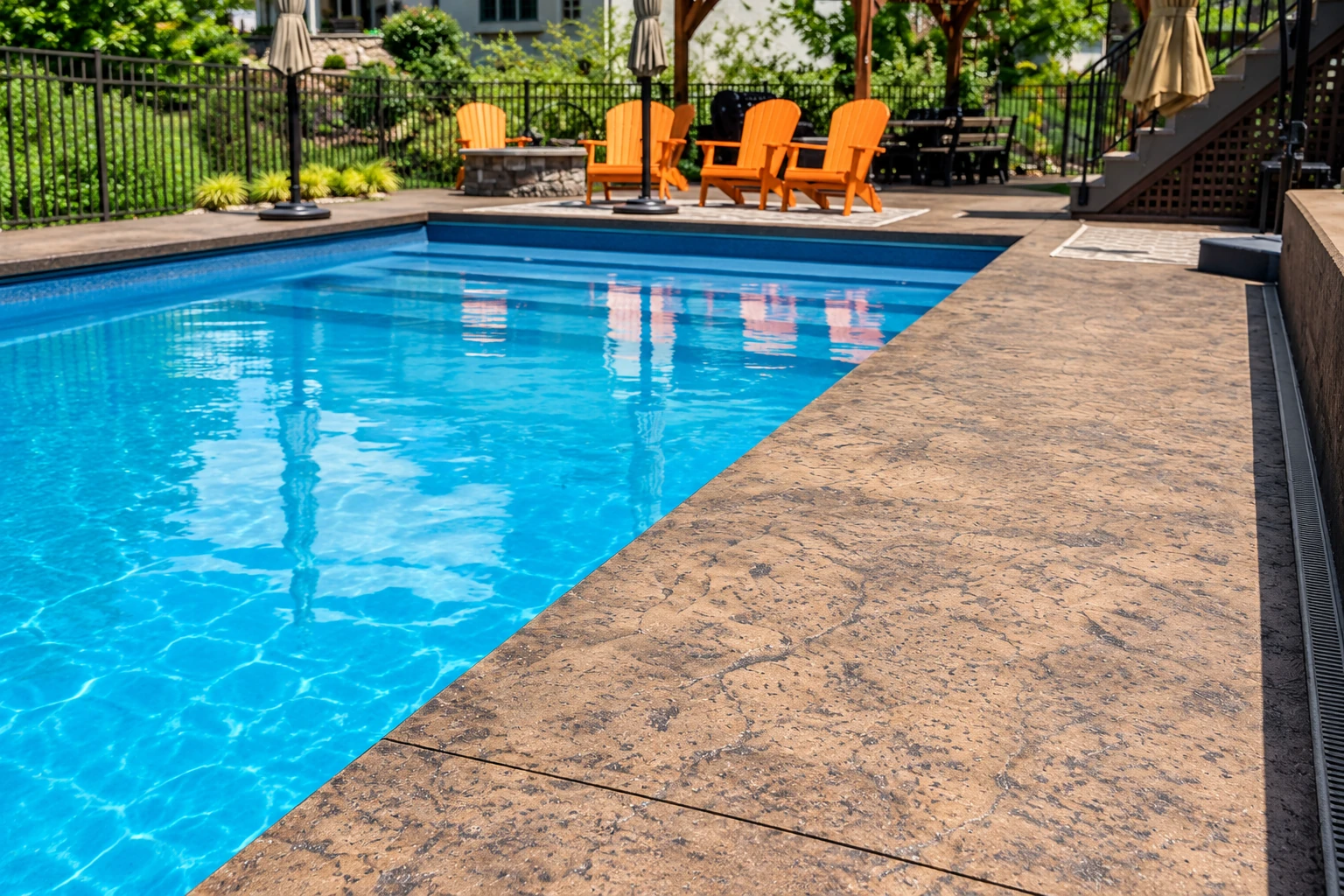
A pool deck needs a finish that grips wet feet and a slope that carries splash water away from the pool and house, so we plan both before the pour.
Front steps here are often chipped or uneven in height, so we rebuild them with even risers and a broom finish, a brushed texture that gives shoes grip.
For additions, garages and backyard rooms, we pour slab foundations on a dug-out, compacted base with the steel the plans call for, and meet the inspector when one is required.
When a building needs a new foundation, we dig, form and pour it to the approved plans, and we schedule any inspections before anything goes on top of it.
Property managers call us for apartment and small business lots, where we replace broken sections, fix low spots that hold water and lay out joints for daily traffic.
Footings carry patio covers, walls, sheds and additions, so we dig them to the size and depth the plans call for and keep the trench clean before the pour.
When a slab or part of a foundation has dropped, we find out why it moved before suggesting a fix, because lifting it without fixing the cause only buys time.
We saw-cut concrete for doorways, plumbing trenches and clean tear-out lines, so only the damaged part of a driveway or walk comes out and the rest stays.
Send the form or call, and we'll reply within one business day to set a visit. I'll look at the job in person and give you a free written estimate, with no obligation to book.
I come out to look at every job and write the estimate myself, and I'm usually there for the pour, so the person who priced it sees it done.
Your estimate says in plain words what comes out, how the base is prepared, how thick the slab is and the finish, so you can compare it with other bids.
We don't pass your job to another company. Our own crew digs, forms and pours it, which is how I know what went under your slab.
These are the questions Lakewood homeowners ask us most about permits, payments and whether a new slab will hold up.
That depends on the type and scope of the work, and the city's Building and Safety Division, which issues Lakewood's building permits, is the office to ask before anything starts. I check with them before I price your job. If a permit is required, planning or plan check approval may come first, a debris recovery plan must be approved before it's issued, and we handle the application.
Under the state licensing board's rules, a down payment on a home improvement job can be no more than $1,000 or 10 percent of the contract price, whichever is less. Every later payment must be listed in the contract and tied to work already finished or materials already delivered to your home. The board says this applies to all home improvement projects.
A new slab can still crack, but one on a packed base, with rebar and control joints cut on time, usually cracks along those joints, where it's hard to see. We pour early, since midday heat leaves a weak, dusty top, and we keep cars off longer than feet while it cures, the slow hardening that gives concrete its strength.
These are the cities with their own page on our site, and we work in others around Long Beach too. If yours isn't listed, please call or send the form and ask.
Call (562) 269-3293 or send the form with a line about what your slab is doing, so I know what to check when I visit.